Showing posts with label Pain Management in Delhi. Show all posts

Thursday, October 29, 2020

MOTHER’S THUMB INFORMATION LEAFLET….… Helping you look after the little ones…..

 Tags >> Causes Of De Quervain's Tenosynovitis,  symptoms of De Quervain's Tenosynovitis,pain management in delhi, Pain Specialist In Delhi

What is De Quervain’s Tenosynovitis?

Tendons are like ropes which connect muscles to bones and are enclosed within a sheath (covering) that allows smooth movement. De Quervain’s Tenosynovitis is caused by painful irritation of the sheath of two tendons as they travel from the wrist towards the thumb. These tendons travel in close proximity to each other and are involved in thumb movements (such as bringing the thumb away from the hand as it lies flat in the plane of the palm). When their sheath becomes thickened or irritated, the tendons have less space for movement resulting in pain and other symptoms. Some experts attribute the degeneration of tendon and deposition of fibrous tissue as the cause for the condition.

What are the symptoms of De Quervain’s Tenosynovitis?

De Quervain’s tenosynovitis presents with

  • Pain and swelling at the base of thumb, wrist
  • Pain during thumb movements such as griping or pinching
  • Sometimes a snapping/ sticking sensation may be felt  with thumb movement 
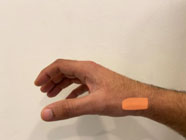
Area of pain  in De Quervain's Tenosynovitis

Image 1: Area of pain in De Quervain’s Tenosynovitis

What causes De Quervain’s Tenosynovitis?

This condition occurs most often between the ages of 30 -50 years. Quite often the cause is unknown although tendon sprain and overuse during repetitive movements can predispose to the development of this condition. Some of the risk factors include:

  • Women, especially mothers with young infants are more likely to be affected due to a combination of overuse, hormonal changes and fluid retention. Improper lifting technique can specially predispose to the development of this condition and it is also addressed as Mothers Thumb.
  • Professions or hobbies involving repetitive wrist or hand motions such as with musicians, dental hygienists, golfers, mountain bikers, typists, video game players. Other commonly used names used for the same condition include texting thumb, gamers’ thumb, washerwoman’s sprain and designer’s thumb.

How is De Quervain’s Tenosynovitis diagnosed?

A simple test used for diagnosis involves making a fist around the thumb placed in the palm on the affected side (Image 2). The patient is then asked to bend the wrist towards the little finger as shown in the image 3. If this makes your pain worse, then the test is considered positive

De Quervain's Tenosynovitis diagnosed

Image 2

De Quervain's Tenosynovitis diagnosed

Image 3

An ultrasound scan may help identify thickening of the tendons, increased fluid surrounding the tendons, increased blood flow, narrowing of the canal/ passage for tendons, anomalies in tendon slips and thus help confirm the diagnosis. MRI is useful for detecting mild disease where ultrasound in inconclusive. An x-ray of the wrist is sometimes requested to rule out other conditions with similar presentation.

How is De Quervain’s Tenosynovitis managed

The treatment option will vary depending on multiple factors such as the duration of symptoms, severity & impact on your daily activities, previous treatments and their results. It can be self-limited and may resolve without intervention. For most individuals non surgical treatment options suffice with very few requiring surgery. Treatment options include-

Rest. This includes avoidance of provoking activities and heavy work with the affected hand for several weeks. Rest provides an opportunity for the symptoms to settle. In mothers with young infants, changing the lifting technique and breast feeding position can make a difference.

Icing – Ice can help in reducing the pain and swelling.  Avoid applying the ice directly to the skin. Ice can be wrapped in a towel and used for a few minutes (as tolerated), a few times in a day.

Splinting – The splint may be required to be worn for a few weeks. It works by restricting the movement of thumb thereby providing an opportunity for healing to occur. The combined use of splints and steroid injections has been found to be more effective than splinting alone.

Medications – Pain killers can provide temporary relief and may include anti-inflammatory medications. It is important to use these medications as directed by your doctor.

Physiotherapy– This involves a combination of stretching and strengthening exercises to improve the hand function. Exercises are best learned under supervision of an experienced therapist. Once you have learned the correct technique, you can continue with these at home. Exercises have been shown to improve the duration of pain relief when used in combination with steroid injection and splinting.

Steroid injections In case the pain does not settle, then your doctor may consider injections. Steroids are effective anti-inflammatory medicines and are commonly used treatment modality with near complete relief with one or two injections.

Sometimes septae (partitions) may be present in the intended injection compartment. Using ultrasound can help not only in verifying the diagnosis but also in visualizing these septae and accurately guiding the injection into the tendon compartments. There are studies highlighting the role of ultrasound in increasing injection accuracy and citing success rates of 91% after up to two injections.

Surgery– if the problem persists despite the above treatments then surgery can be considered.


Categories >> 

Monday, July 6, 2020

All you need to know about Sciatica

1. What is sciatica?

Sciatica is term used to describe pain that travels (radiates) down the leg from the lower back or buttock. It is a type of nerve pain and a number of cases are caused by pressure on the nerves due to disc bulge in the low back. This is most commonly seen in middle-aged adults and men are more susceptible. The term sciatica originated from the sciatic nerve, which is the single largest nerve in our body. This nerve is responsible for a significant proportion of leg sensation and movement. Sciatica represents pain in the area supplied by the sciatic nerve.
Radicular pain/ radiculopathy are medical terms which doctors use when describing this condition. There are numerous reasons for having leg pain and every leg pain is not sciatica. Commonly people misinterpret sciatica as a disease and need to be explained that it is a symptom of the underlying problem.

2. What are symptoms of sciatica?

The severity and symptoms many vary considerably. In severe cases the affected individual may find it difficult to walk or even stand up straight.
Some of the commonly observed symptoms include
  • Sharp, burning, stinging, shooting, electric shock or cramps like pain in one or both legs often as far down as the foot. Movement, coughing and sneezing can intensify the pain
  • Tingling, pins and needles and/or numbness in leg or foot
  • Muscle weakness with difficulty in weight bearing or walking.
  • Buttock/low back pain and stiffness.

3. What causes sciatica?

  • Disc herniation: Spine is formed of many bones called vertebrae arranged one above the other. In between these vertebrae are discs, which are like cushions or shock absorbers. The discs are made up of an outer tough substance and an inner soft jelly like substance. Herniation of the disc can occur if there is splitting or crack in the outer layers allowing the inner jelly like substance to protrude through the crack. This can cause inflammation and compression of the nerve roots in the vertebral column. Slipped disc is a commonly used term for this condition. There is an increased susceptibility to disc herniation as we age because the soft, jelly like substance dries out and shrinks with time, making the disc more fragile.

  • Spinal stenosis: Stenosis means narrowing. The narrowing can be of the central canal of the spine or the passageways/ tunnels from which the nerves exit the spine. Besides disc problems, arthritis of the spinal joints or thickening of ligaments can also cause/ contribute to the narrowing.

  • Spondylolisthesis: In this condition there is a problem with the alignment of vertebrae, where one vertebra is more forward or backwards, which can narrow the spaces for nerves and produce sciatica as a result.

  • Piriformis syndrome: In this condition piriformis muscle in the pelvis is responsible for pressure on sciatic nerve.

  • Trauma/ fractures

  • Spinal tumors and infections are rare causes of sciatica

4. Can it resolve on its own?

Fortunately most cases of sciatica resolve within a period of weeks to months with conservative treatment. Specialist input and treatment can help. Painkillers, heat or cold pack, altered activity levels and physical therapy may be suggested depending on your condition. An injection of steroids into the epidural space within the spine can provide short-term pain relief in sciatica. Persistent pain can lead to changes in the nerves (referred to as plasticity). This can be a source of persistent pain even if the original inciting event is resolved … hence the importance of managing these sooner than later.
Having seen numerous cases over the years, I would say that it is not easy to predict the course. It can resolve but to what extend depends on numerous factors- some are modifiable and others are not. The recovery period varies from individual to individual.

5. What are the warning signs I need to be watch for?

Some symptoms point towards a serious problem and require urgent medical attention. Ignoring these could lead to permanent nerve damage. Some of these include
  • Loss of urinary control/ inability to pass urine
  • Loss of control over stools
  • Numbness around the bottom
  • Worsening leg weakness / loss of control

6. What can I do to reduce my risk of having sciatica?

Though it’s not possible to completely eliminate the risk of sciatica, however adopting a healthy life style can help in reducing the risk. This includes
  • Giving up smoking
  • Regular exercises
  • Right posture and work ergonomics
  • Healthy diet and maintaining weight in the normal range
  • Using proper manual handling techniques while lifting to avoid back injury
  • Stress Management

7. What investigations are generally considered for sciatica?

Your doctor may request for investigations such as magnetic resonance imaging (MRI) scan and blood tests. Sometimes computerized tomography (CT) scans may also be required. X-rays are not as helpful and they can provide only limited information.
Bulging discs on an MRI scan are not an uncommon finding. It is important not to get fixated on the MRI findings. A bulging disc is not permanent and can reverse. The investigation results should be interpreted in combination with patient history, examination findings to assess their significance.A number of patients with severe MRI findings may be asymptomatic and vice versa.

8. What are the other treatment options?

Sciatica is different from common ailments we all suffer and hence taking professional help is recommended. Your doctor can help to confirm that you have sciatica and help identify the cause. A range of different options- non surgical (such as injections- nerve root blocks, epidurals, piriformis injection etc) or surgical may be considered. There is no one solution for sciatica pain and the options are numerous – some with good evidence and others with not so robust evidence.
Generally a multimodal multidisciplinary approach is preferred as this helps in addressing not only the pain but also the impact of pain on one’s life. I ensure that the patient understands the nature or problem and the do’s and don’ts. Time spent in explaining the conditions and the expected course goes a long way in fostering realistic expectations. I generally use a combination of the modalities mentioned below to enhance the chances of quicker recovery.
Pain relief:
Pain reduction achieved by medicines help to maintain activity and improves physiotherapy compliance. The medications used depend on the type and severity of pain, duration of symptoms and individual factors such as co morbidities and allergies. Some of the commonly prescribed pain killers include
  • Non steroidal anti-inflammatory drugs (NSAIDs)
    This includes drugs such as DIclofenac, Naproxen, Aceclofenac, Ibuprofen etc. NSAIDs are prescribed to reduce the pain and inflammation during periods of acute sciatica although the evidence supporting their use is not very robust. The risk benefit ratio needs to be evaluated while prescribing any drugs.
  • Neuropathic pain killers
    This group includes antidepressants and anticonvulsants both of which are well known painkillers for nerve pain. It generally takes a few weeks for the full effects of these drugs to become apparent. Effects such as reduced anxiety and sedation can be used beneficially by tailored selection to suit individual patients. Their use is supported by the NICE guidelines, UK.
  • Opioids
    Weak opioids such as tramadol are often prescribed during pain flare up episodes. It is a good practice to be aware of the side effects of a medicine prior to using it.
  • Muscle relaxants
    These are used for short duration to relieve any muscle spasm contributing to the back pain.

Spinal Injections:

The use of epidural steroids/ Nerve root blocks has been shown to have beneficial improvements in leg pain and disability scores in short term. Steroids help by their anti-inflammatory and analgesic (pain relieving) effect. Epidural steroids are preferred to oral steroids as they are given close to site of actual problem and have less adverse effects.

Physiotherapy:

Physiotherapy is an essential component of sciatica treatment. Your physiotherapist can help with posture advice, do’s and don’ts relevant to your condition, understanding the concept of pacing of activities, setting practical goals, teaching strengthening exercises for core, leg muscles and manual handling techniques.

Surgery:

If a combination of above fails to provide adequate relief then surgical options such as discectomy (operation to remove bulging part of the disc or separated disc fragments) and microdiscectomy can be considered for sciatica resulting from disc bulge. Surgical options will vary depending on the cause of sciatica and sometimes may be the first choice, depending on the actual pathology and its severity.

Monday, May 25, 2020

Radiofrequency Treatment for Chronic back pain and Neck Pain Treatment in Delhi.

Radiofrequency ablation is a commonly used procedure for the management of chronic low back pain and neck pain. It is used for managing pain secondary to arthritis of the joints in the spine and offers a safe, effective non surgical, minimally invasive option for patients suffering with longstanding back and neck pain. This procedure is also used for sacroiliac joint pain as in patients with ankylosing spondylitis.

Advantages of this procedure include

  • No requirement for hospital stay or prolonged rehabilitation
  • Normal activities can generally be resumed soon after the procedure with little recovery time
  • Less pain can lead to improved functionality and reduced medication requirements
  • Lasting pain relief for and a low complication rate

Chronic back and neck pain

Spine is made up of a number of vertebrae which are stacked one above the other. These vertebrae are cushioned anteriorly by the disc and join with each other posteriorly at joints called the facet joints. There are two facet joints at each level. Wear and tear, degeneration of these joints can lead to back or neck pain. This condition is called facet joint arthritis or facet arthropathy. Pain originating from facet joint arthritis is generally described as a dull ache accompanied by stiffness. It is not uncommon for the pain in lower back to radiate along the back of thighs up to the knee joint. Similarly pain from lower neck (cervical) joints can radiate to in between the shoulder blades or the shoulder joint and that from upper neck joints can cause headaches.
Pain sensations form the facet joints are transmitted to brain via nerves called the medial branches. These nerves are the target in the radiofrequency treatment
Radiofrequency ablation involves placing special needles, using x-ray guidance, close to the nerves carrying pain sensation from the affected facet joints. Using specialised equipment a small area of these nerves is heated using the electric current produced by radio waves. This reduces the pain signals being transmitted by the nerves to the brain resulting in pain relief. This is a day care procedure performed under local anaesthesia and can provide long lasting pain relief.
Dr. Manocha has been formally trained in performing this procedure in the U.K. and U.S. The technique he uses is the same as advocated by International Spine Society giving you the best chances of having a successful outcome.
Consult Best Pain Specialist In Delhi, Dr. Amod Manocha.

Friday, May 22, 2020

5 Things You Should Know About Coccyx Pain treatment in Delhi

1. Introduction

The coccyx or the tailbone is the bottom most part of the spinal vertebral column which has many muscle and tendon attachments. It is one of the lesser known body parts but this bony beak shaped structure gains attention in cases of coccygeal pain or in common terms, coccydynia. It is imperative to consult the best pain specialist and many patients are now looking for pain treatments in Delhi due to availability of experienced doctors, high-end infrastructure and world class treatment available at quite a reasonable price.

2. What triggers Coccydynia?

Coccyx plays a role in stabilizing your body when you sit, or switch positions and is subjected to stress and strain especilly when using lack of ergonomically designed furniture.
Coccydynia is particularly common in women due to a wider pelvic structure possibly predisposing tailbone to more stress. Coccyx injury in particular is the most common cause of coccyx pain and it may cause bruising, inflammation, dislocation or fracture of the tailbone.
Mentioned below are the various causes for coccyx injury:
  • Falling while being in a seated position, while on a chair, or from the stairs
  • Sports injuries
  • Injury during labour
  • Friction injury caused by cycling or rowing
  • Idiopathic causes
  • Bone spurs
  • Infections
  • Neoplasms
  • Obesity
  • Prolonged sitting

3. A brief overview of the symptoms and signs of Coccyx Pain:

  • Coccydynia causes intense, severe, sharp pain in the buttock area and can aggravate on changing positions from sitting to standing or leaning.
  • Coccydynia can present as pain and discomfort during sexual intercourse.
  • Sometimes it is accompanied by bruising.
  • Difficulty in bowel movements, accompanied by pain.

4. How is Coccyx Pain Diagnosed?

You need to consultant experienced pain specialist who can diagnose your tailbone pain. Proper diagnosis and identification of provocating factors helps tailor treatment to achieve best results
  • A proper history is taken first to rule out any instances of injury or trauma
  • Examination can help narrow down the possible pain generators
  • In cases of bone spurs and injury, X rays are taken.
  • MRI may be requested especially In case of cancer or fracture
  • Injections can further help confirm the source of pain

5. Management and Treatment

The key to successful management of coccydynia is consulting an experienced pain specialist. Coccydynia can be managed by a combination of lifestyle modifications, physical therapy and pharmacological measures. This includes
  • Avoiding further strain on the pain area by using cushions for support
  • Reducing weight if you are overweight
  • Physical therapy
  • Use of injections like –
  • Coccyx or Sacrococcygeal Joint Injections, and
  • Ganglion Impar block and Radiofrequency treatment.
Pain Specialists also suggest the followingfor relief from Coccydynia :
  • Preventing prolonged sitting position and avoiding hard surfaces while sitting
  • Ice fomentation during acute flare up episodes
  • Over the counter medications including NSAIDS like Naproxen, Acetaminophen, Ibuprofen
  • Consuming high fiber foods to counter constipation

Thursday, March 26, 2020

Pain Specialist In Delhi for Spine Pain treatment


Epidural injections for Spine Pain treatment

Epidural injections are a pain management option for patients with leg or arm pain originating from the spine. This is also known as Radicular pain or Radiculopathy. The pain usually radiates away from the irritated nerves. For Example – the pain could be originating from lower spine and may be felt far away in the legs. Pain specialists offer non-surgical options like this one for pain relief. As the techniques used are minimally invasive, and do not involve surgical incision or prolonged recovery, the risks involved are less.
One of the causes nerve pain is the narrowing (stenosis) of the space for these nerves in the spine or narrowing of the space from which these nerves exit the spine. This may be secondary to a slip disc or rupturing of the discs.
Depending on the problem different techniques /routes may be utilised to perform epidural injection. Nerve root block /transforaminal epidural, caudal epidural, interlaminar epidural are all epidural injections. Different names are used to indicate the technique used and route of entry. The route or the technique used can have an impact on where the maximum amount of drug is deposited.

How the epidural Injection works

Generally a combination of local anaesthetics and steroid are uses in these injections. The resulting pain relief can last for a few months although some people can experience long lasting relief from these injections. Corticosteroids serve dual purpose as an analgesic as well as have anti-inflammatory property. So, they help to control both pain and inflammation.
Immediately after the injection the injection site can feel sore although this is not troublesome for most people. This is mainly because of the mechanical process of inserting needle or at time also due to irritation resulting from the injected medication. But you need not worry about this as it will fade away soon and the pain relief would become apparent as the steroids start to work.

Benefits of Epidural Steroid Injection

There are numerous benefits of epidural pain injection over oral corticosteroids:
  • Epidural injection delivers the medication close to the problem as a result more drug reaches the site of action compared to when it is taken orally.
  • Side effects of the epidural injection are less compared to oral corticosteroids.
  • The duration for which the effect of epidural steroid injection is generally longer. This period can be effectively utilized by the patient to engage in physiotherapy and strengthen the supporting muscles.
  • Epidural steroidal injections help in providing quick pain relief in case of severe pain

Epidural injection works very well in case of pain originating from lower back (thoracic spine), neck (cervical spine) and mid back (thoracic spine). You should take expert advice from experienced pain specialists in Delhi as they can give you advice regarding the most appropriate therapy for you. Generally epidural injections are more beneficial in cases where the pain travels (radiates) towards arms or legs. Discuss this option with your specialist to find out if this is the right treatment for you.


Friday, March 6, 2020

How To Communicate Regarding Your Joint Pain To Your Doctor


Joint pain can be a source of prolonged discomfort that one may have to endure in life. This can affect your daily activities and make you feel depressed. Joint pain specialists in Delhi NCR are daily visited by numerous patients complaining of severe pain and in search of treatments that can provide quick relief.
For you to get the most appropriate treatment, the way you explain your pain to the doctor is important. There are a plethora of options for joint pain treatment in Delhi NCR. But reaching out to the right-center with experienced and skillful professionals whom you can count upon is important.
Read below to understand the importance of accurately describing your joint pain concerns to your treating doctor:
  • Joint pain is subjective, without your explaining it may be very difficult for the doctor to know what your pain feels like and how severe it is
  • Joint pain can have numerous causes such as age-related wear and tear, injury, trauma, infections, etc
  • Involvement of multiple joints in the body may require different assessment/investigations than just one isolated joint problem. Treatment options may also differ depending on the actual pathology
  • Treatments offered depend on the severity of symptoms, their impact on your life, your age, activity levels and your goals/expectations. There are many treatment alternatives –both non-surgical and surgical, depending on the assessment of the above factors
  • These are some important points which may help your doctor to understand and treat your pain better:
  • Explain where the pain is; how long you have had the pain and how it started. If possible point the exact place, is it in the knee, ankle or shoulder pain?
  • The character of pain can help in narrowing down the possible causes. For example is it aching, burning, shooting or stabbing pain? Is it present all the time?
  • Aggravating or relieving factors are equally important- Is it worse when you are walking or at night time when you are trying to sleep. is it when you sit, walk or stand?
  • It is important to tell the doctor how the pain affects your daily life. This information is essential as it enables the doctor to have a clear overview of what you are feeling. While describing the impact of pain do not forget about your sleep and mood.
In case the pain is short-term, your doctor may recommend home care like –
  • Applying ice or hot compression at the joint several times.
  • Avoiding activity that may cause pain.
  • Using a brace to protect the joint.
Various other options are used for Joint pain treatment in Delhi NCR like steroid or hyaluronic acid injections, nerve blocks and radiofrequency treatment. They can all help to ease the suffering and improve your quality of living. Some options are specific to the joints involved. These are mostly combined with medications and physiotherapy to improve outcomes.